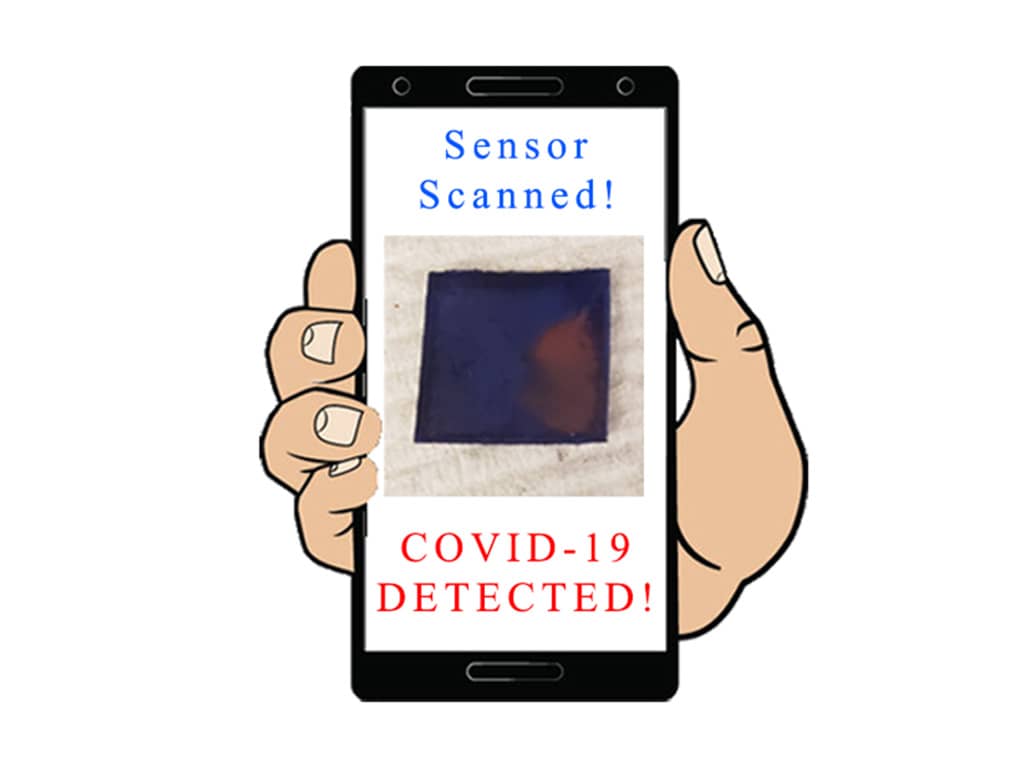
In 2021, I designed and fabricated a paper-based, colorimetric biosensor for detecting SARS-CoV-2 in artificial saliva. The project became a first-author, peer-reviewed publication in Biosensors and was recognized through the Davidson Fellows Scholarship.
Motivation
During the COVID-19 pandemic, rapid testing created a clear need for inexpensive, accessible screening methods. I focused on a simple visual-readout format: a paper strip that changes color in response to viral material in saliva-like samples.
The design used polydiacetylene paper strips, which can produce a visible colorimetric response when the material’s conjugated polymer backbone is perturbed by molecular interactions.
Experimental Approach
The project required building the assay from concept through validation:
- Developed a sensor fabrication workflow for polydiacetylene-coated paper strips
- Prepared artificial saliva samples and SARS-CoV-2 target materials for controlled testing
- Used colorimetric analysis to quantify visible sensor response
- Applied spectroscopy and statistical analysis to characterize and validate performance
Results & Recognition
The work resulted in a first-author publication:
Prainito, C. D., Eshun, G., Osonga, F. J., Isika, D., Centeno, C., & Sadik, O. A. (2022). Colorimetric Detection of the SARS-CoV-2 Virus (COVID-19) in Artificial Saliva Using Polydiacetylene Paper Strips. Biosensors, 12(10), 804.
The project was also recognized by the Davidson Fellows Scholarship. The Davidson Institute’s project profile provides an external summary of the work and its impact.
View the Davidson Fellows profile
My Role
I independently developed the project proposal, fabricated the sensor platform, ran the experimental workflow, analyzed the data, and prepared the work for publication in collaboration with my research advisors and coauthors.