Skip to content

Christopher Prainito · Physics Ph.D. student at MITI build instruments for physics experiments and for spaceflight.

I'm a first-year Ph.D. student at MIT and an NSF Graduate Research Fellow, working on detectors for the DUNE neutrino experiment. Before that, I spent four years at Harvard leading the engineering of HUCSat, the university's first student-built satellite. It is orbiting Earth right now.

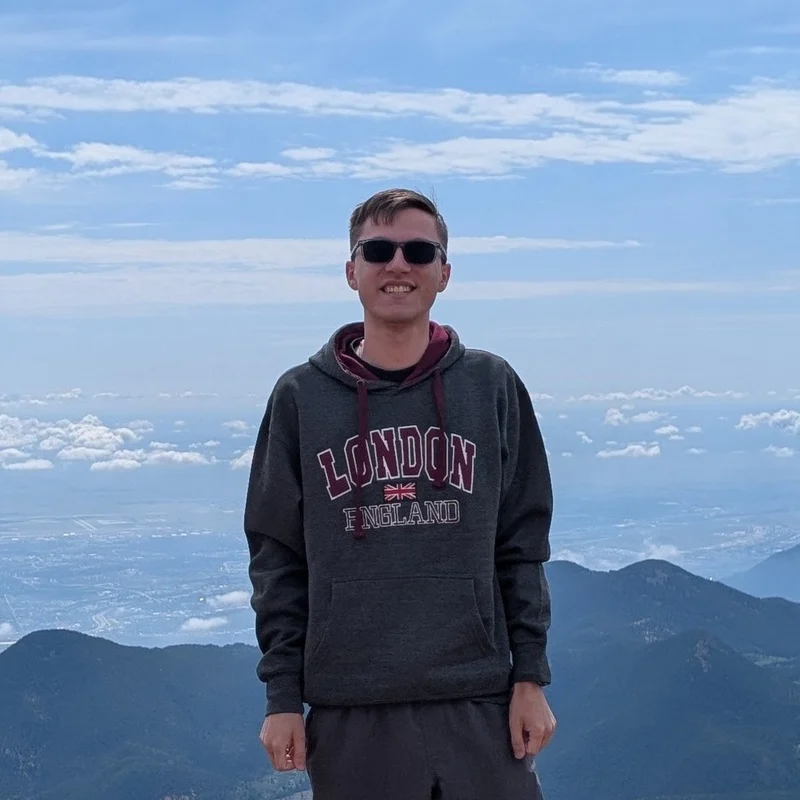
Christopher Prainito standing on a mountain summit above the clouds
HUCSatReleased from the International Space Station on July 2, 2026Mission page
In orbit
HUCSat, Harvard's first student-built satellite. I was Chief Engineer. Launched to the ISS in April 2026 and deployed in July.
NSF GRFP
National Science Foundation Graduate Research Fellow, awarded in 2026.
Summa cum laude
Harvard A.B. and A.M. in 2026 with a 4.0 GPA and highest honors in physics. My thesis won the Hoopes Prize.
3 publications
Including Physical Review X (2025) and a first-author Biosensors paper (Editor’s Choice, 30+ citations).

What I'm working on now

  • MITDetector simulation and waveform-based reconstruction for the Deep Underground Neutrino Experiment (DUNE).
  • HUCSatLeading on-orbit operations and commissioning of the shape-memory-alloy solar panel payload.
  • IceCubeFinishing the readout circuit boards for the muon-tagged calibration facility from my undergraduate thesis.

Selected work

Drag to rotate

In orbit since July 2026

HUCSat

Harvard's first student-built satellite

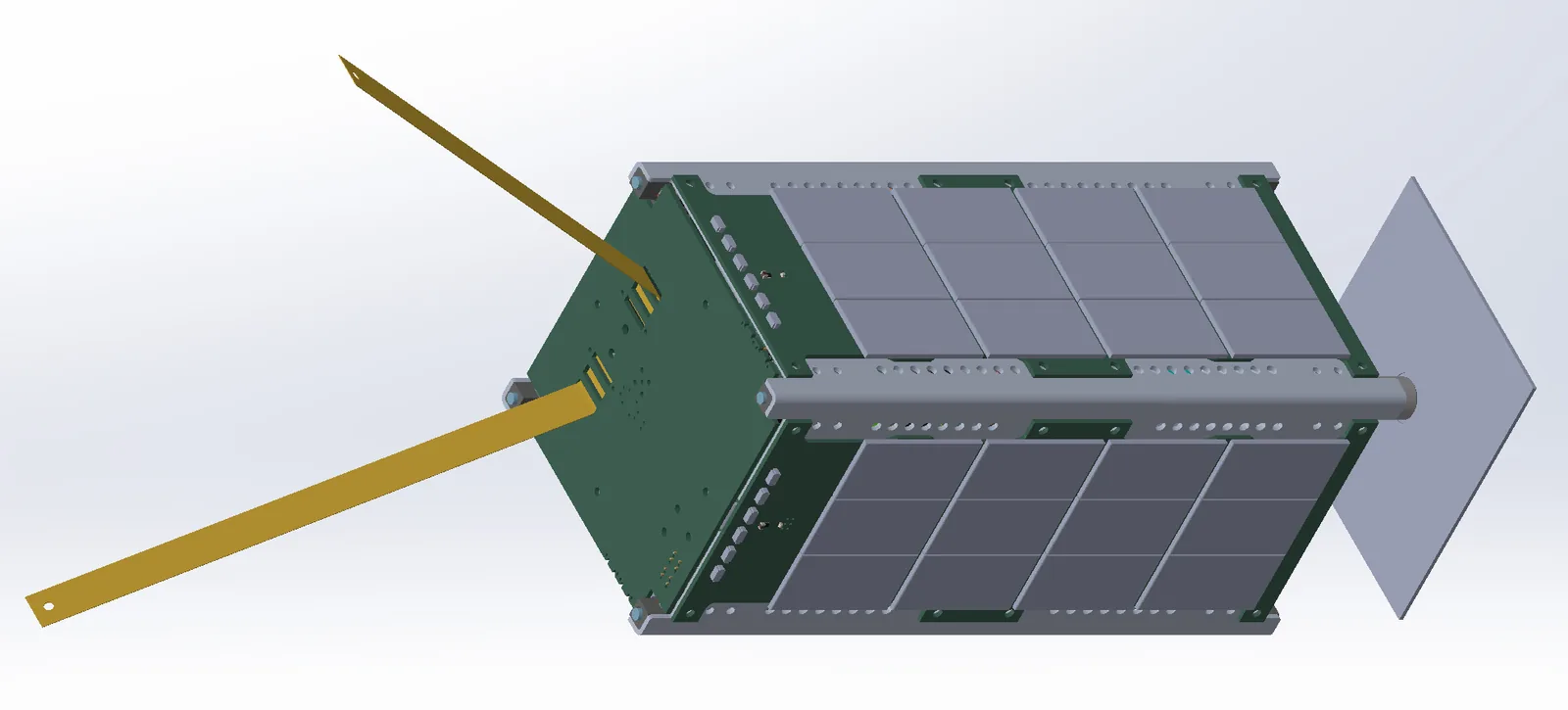
A satellite the size of a loaf of bread that tests a new way to aim a solar panel at the Sun: four springs made of nitinol, a metal that changes shape when heated, instead of motors and gears. I proposed the mechanism as a first-year student and went on to lead the engineering team of more than 25 students from design through launch. I now run its operations in orbit.

My role
Chief Engineer
Launched
April 11, 2026
Selected by
NASA CubeSat Launch Initiative
Read the full story

Harvard thesis, Hoopes Prize2025 to present

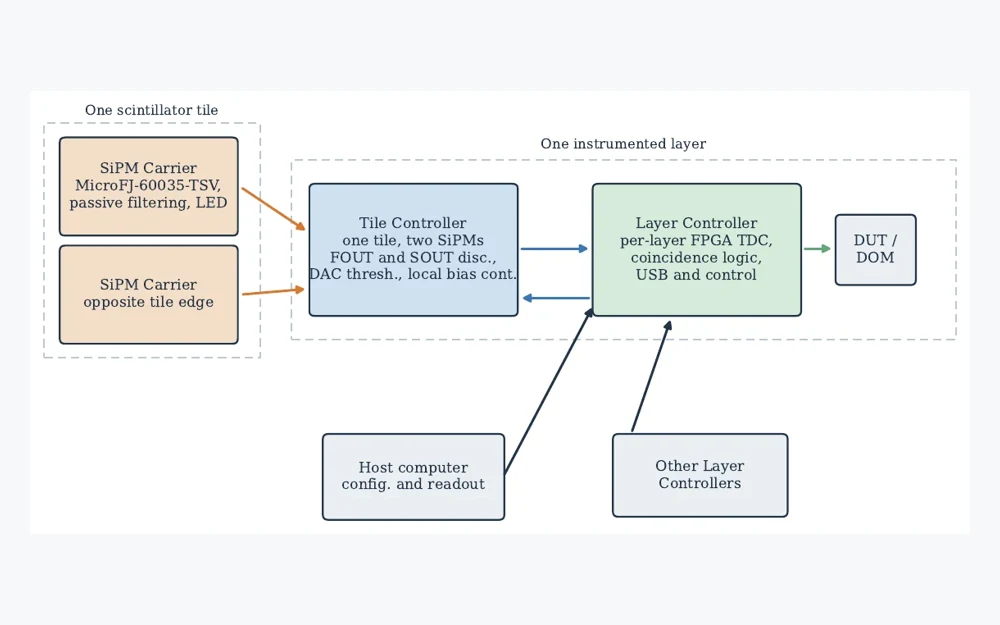
Muon-Tagged Calibration Facility for IceCube

A detector that tracks cosmic-ray muons so the light sensors for the IceCube neutrino observatory can be calibrated before they are frozen into South Pole ice. My simulations showed that timing was the limiting factor, so I designed the readout electronics around it. Awarded Harvard's Hoopes Prize.

Particle DetectorsGeant4 SimulationFPGAMixed-Signal PCB Design

Read more

Sub-arcsecond tracking2023

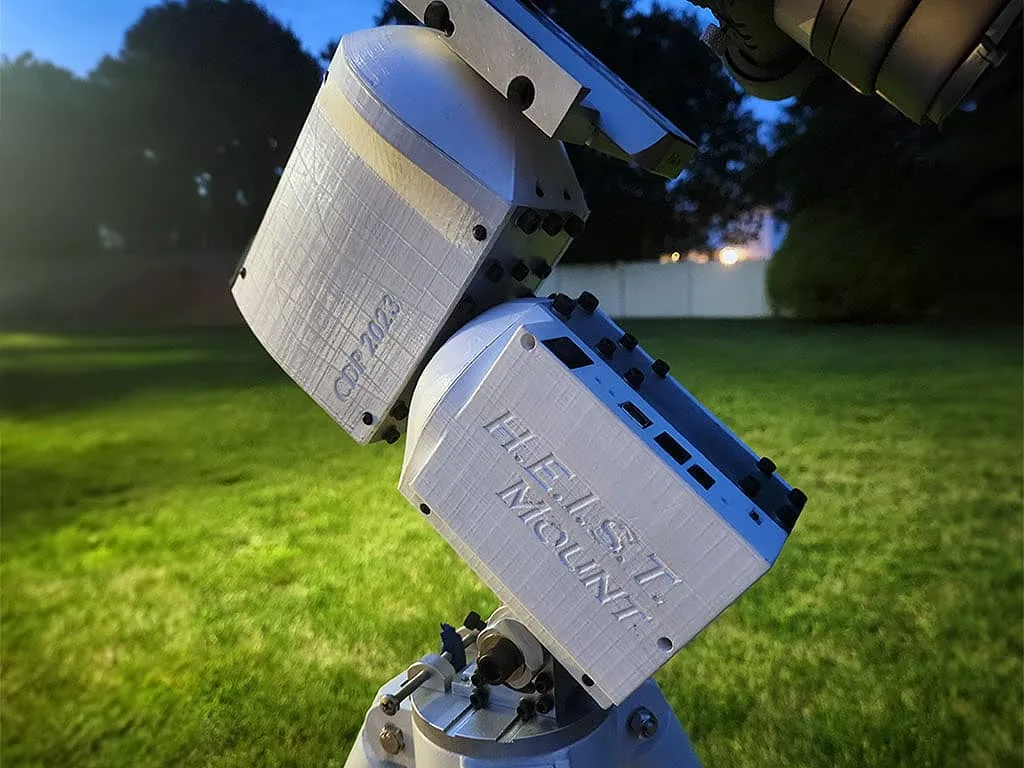
H.E.I.S.T. Mount: A Telescope Mount I Built from Scratch

A portable, computer-controlled mount that keeps a telescope locked on its target for hours while the sky turns. I machined the parts, designed the control board, and have taken every image in my astrophotography gallery with it.

CAD DesignPCB DesignMetal MachiningEmbedded Control

Read more

First-author publication2021 to 2022

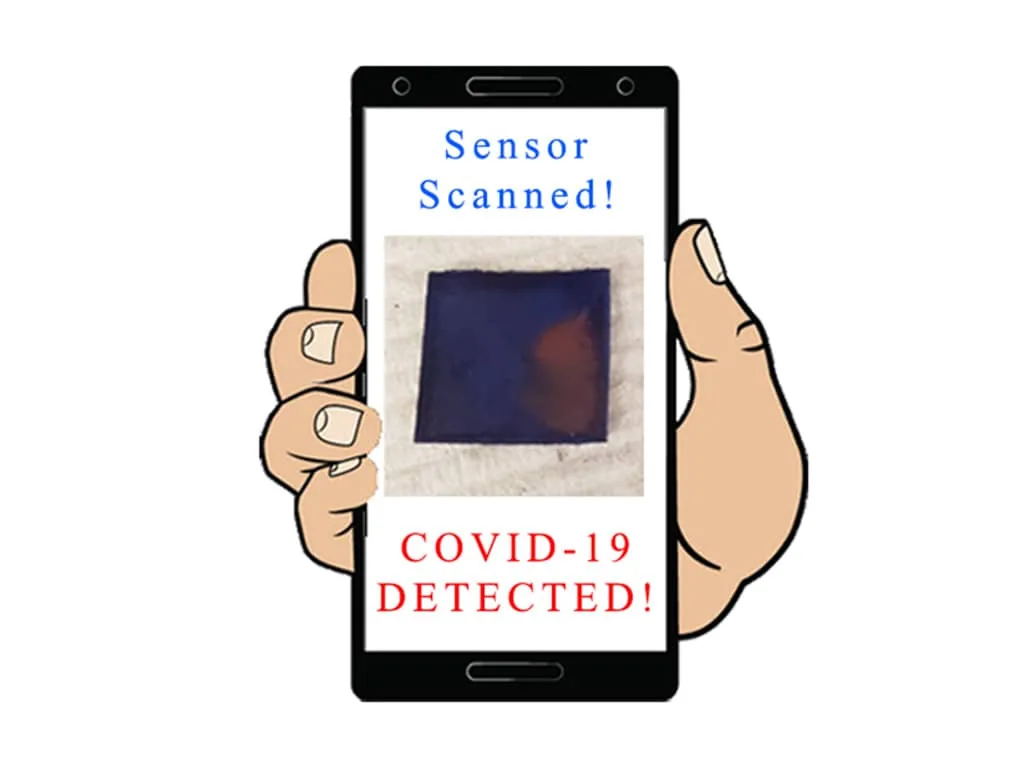
Paper-Based COVID-19 Biosensor

A low-cost paper strip that changes color when it detects the virus that causes COVID-19. I developed it in high school. It became a first-author paper (Editor's Choice, cited 30+ times) and earned a Davidson Fellows Scholarship.

BiosensorsAnalytical ChemistryExperiment DesignStatistical Analysis

Read more

Research and engineering experience

  1. 2026 to present

    Ph.D. Student Researcher

    Massachusetts Institute of Technology, Russell Group

    Simulating how liquid-argon detectors respond to particles and reconstructing events directly from their raw signal waveforms, for the Deep Underground Neutrino Experiment (DUNE). Advisor: Prof. Brooke Russell.

  2. 2022 to 2026

    Chief Engineer, HUCSat

    Harvard Undergraduate Aerospace Collective

    Led 25+ students across five subteams to deliver Harvard's first CubeSat to the ISS: systems engineering, integration and testing, NASA and launch-provider coordination, and FCC licensing. Payload Lead from 2023 to 2024. Now leading on-orbit operations.

  3. 2025 to 2026

    Undergraduate Researcher, IceCube

    Harvard Argüelles Group

    Designed a cosmic-ray muon tracker and three-board timing electronics for calibrating IceCube optical modules. Wrote the Geant4 simulation, tested 180 configurations, and earned the Hoopes Prize for the thesis.

  4. Summer 2025

    Engineering Intern

    U.S. Army DEVCOM C5ISR Center

    Developed time-synchronization techniques for positioning, navigation, and timing (PNT) in GPS-degraded environments.

  5. 2024 to 2025

    NSF REU Researcher

    Stony Brook University, Liu Lab

    Built a quadrature phase-differential interferometer for scanning near-field optical microscopy. Coauthor of the BOSON paper in Physical Review X.

  6. 2023

    Undergraduate Researcher

    Harvard Semeghini Lab

    Designed and aligned the optics for laser frequency locking in a dual-species neutral atom array experiment.

  7. 2021 to 2022

    High School Researcher

    New Jersey Institute of Technology

    Developed a paper-based colorimetric sensor for SARS-CoV-2, leading to a first-author publication and a Davidson Fellows Scholarship.

Publications

Honors and fellowships

Graduate

  • NSF Graduate Research Fellowship2026

Harvard

  • Thomas T. Hoopes Prize (senior thesis)2026
  • Jack T. Sanderson Memorial Prize in Physics2026
  • Sophia Freund Prize2026
  • Summa cum laude, highest honors in physics2026
  • Department of Defense SMART Scholarship2024
  • Detur Book Prize2024
  • John Harvard Scholar2023 to 2025

High school

  • Davidson Fellows Scholarship2022
  • Regeneron Science Talent Search Scholar2022
  • Regeneron ISEF Finalist2022

About me

I like problems that sit between physics and hardware: working out what a signal can tell you, and then building the instrument that captures it. At MIT, that means detectors for neutrino physics.

I graduated from Harvard in 2026 with an A.B. in physics and mechanical engineering, a secondary field in astrophysics, and an A.M. in physics. Along the way, I worked on quantum optics, terahertz microscopy, timing for GPS-degraded environments, and calibration for the IceCube neutrino observatory, and I spent four years building a satellite.

Outside the lab, I photograph nebulae and galaxies with a telescope mount I built myself, track and talk to satellites over amateur radio, and fly: I earned my private pilot certificate in August 2026. I play the oboe, saxophone, organ, and piano, and I run astronomy nights for students on Long Island whenever I'm home.

Tools I use

Software
Python, C/C++, Geant4, ROOT, Verilog, VHDL, MATLAB, C#, Java, JavaScript, SQL
Hardware
KiCad, SolidWorks, Fusion 360, FPGA design, electronics fabrication, metal machining
Languages
English (native), Spanish (professional working proficiency)

Teaching, service, and outreach

  • Course Assistant, Laboratory Electronics (Physics 123/223), Harvard, 2025
  • Course Assistant, Mechanical Systems (ES 125), Harvard, 2024
  • Course Assistant, Linear Algebra (Math 22), Harvard, 2023
  • Astrophysics Department Lab Assistant, Harvard, 2024 to 2026
  • Astrophotography Chair, Student Astronomers at Harvard-Radcliffe, 2022 to 2026
  • Founder and President, Students Giving Trees, a student-run nonprofit planting trees in local parks since 2020

Astrophotography

Nebulae and galaxies, photographed from dark-sky sites and my backyard with the telescope mount I built.

See all 19 images