HUCSat is a 2U research satellite demonstrating a novel shape-memory-alloy (SMA) solar array orientation mechanism. It launched to the International Space Station aboard NG-24 in April 2026, deployed into low-Earth orbit in July 2026, and has begun on-orbit operations. As Chief Engineer, I led the technical development of this student-built spacecraft from concept through final integration and handoff to the launch integrator.
Why HUCSat Exists
On small satellites, moving hardware (solar arrays, antennas, sensors, etc.) often means adding motors, geartrains, and control electronics, all of which cost mass, power, and reliability margin. HUCSat explores a lighter-weight alternative: shape-memory alloys (SMAs).
The core idea is very simple:
- Train a nickel-titanium (Nitinol) element to a target shape.
- Electrically heat it (Joule heating) to trigger a phase transition.
- Use the resulting mechanical contraction as an actuator.
HUCSat tests whether an SMA-driven mechanism can provide useful, repeatable motion in the space environment with minimal electronics, which is a result that could inform future low-cost deployments and pointing mechanisms for CubeSats and small satellites.
HUCSat was handed off to NASA’s launch integration flow in January 2026 and launched to the ISS aboard Northrop Grumman’s NG-24 commercial resupply mission on April 11, 2026 through NASA’s CubeSat Launch Initiative (CSLI). It deployed from the ISS on July 2, 2026 and operates under an amateur radio license.
Mission Goals
HUCSat is designed around a clear set of mission outcomes:
- Safely initialize after ISS deployment, establish communications, and detumble.
- Deploy the payload from its stowed configuration.
- Demonstrate controlled reorientation of the SMA-driven solar panel platform for at least one orbit.
- Downlink telemetry and payload data, including sensor verification of actuation.
Spacecraft Specifications
| Category | Summary |
|---|---|
| Form Factor | 2U CubeSat (10 × 10 × 20 cm) |
| Mass | ~2.6 kg |
| Launch | NG-24 to the ISS (April 11, 2026) |
| Deployment | Nanoracks CubeSat Deployer (July 2, 2026) |
| Orbit | ~410 km circular, ~51.6° inclination |
| Communications | UHF LoRa (command/telemetry) + S-band LoRa (payload data) |
| Avionics | Custom flight controller with watchdog + subsystem interfaces |
| ADCS | IMU + sun sensors + magnetorquers (detumble/coarse control) |
| Power | Body-mounted solar panels + Li-ion battery packs |
| Payload | Deployable solar panel platform with 4 SMA coils |
High-Level Architecture
At a system level, HUCSat is a compact, integrated stack: structure, power, avionics, communications, attitude control, and payload.
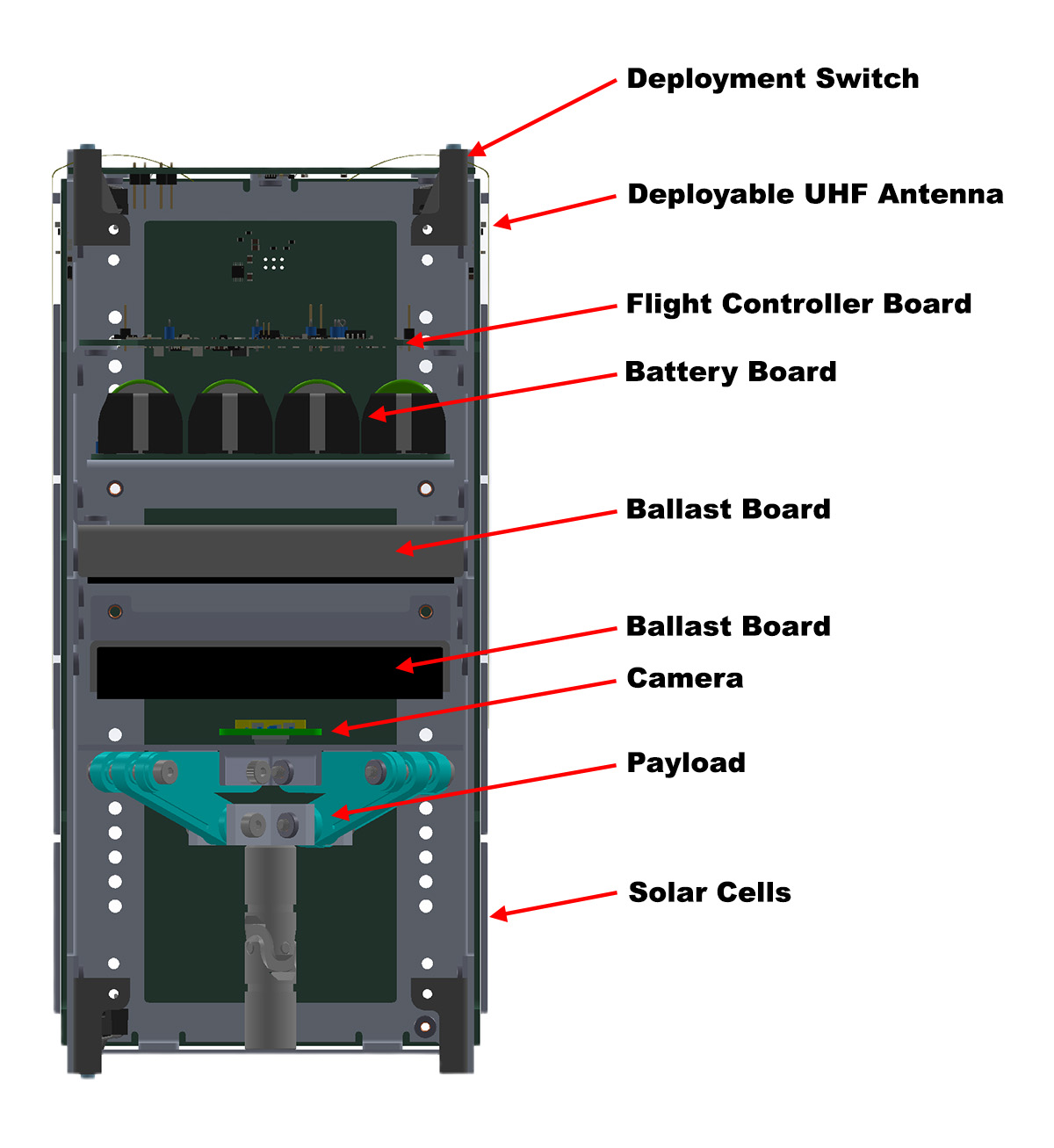 Subsystem-level architecture showing the deployable antenna, avionics stack, power system, payload volume, and body-mounted solar panels.
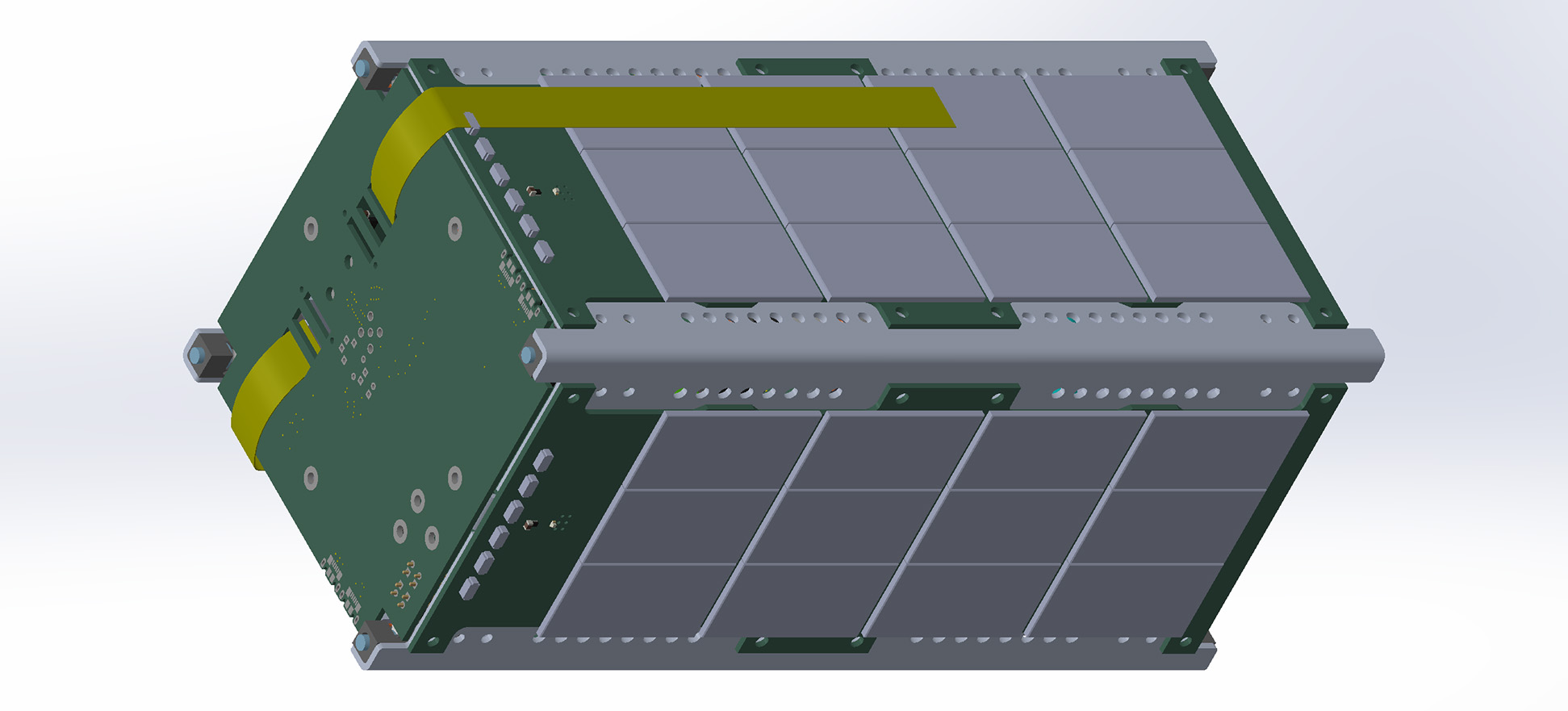
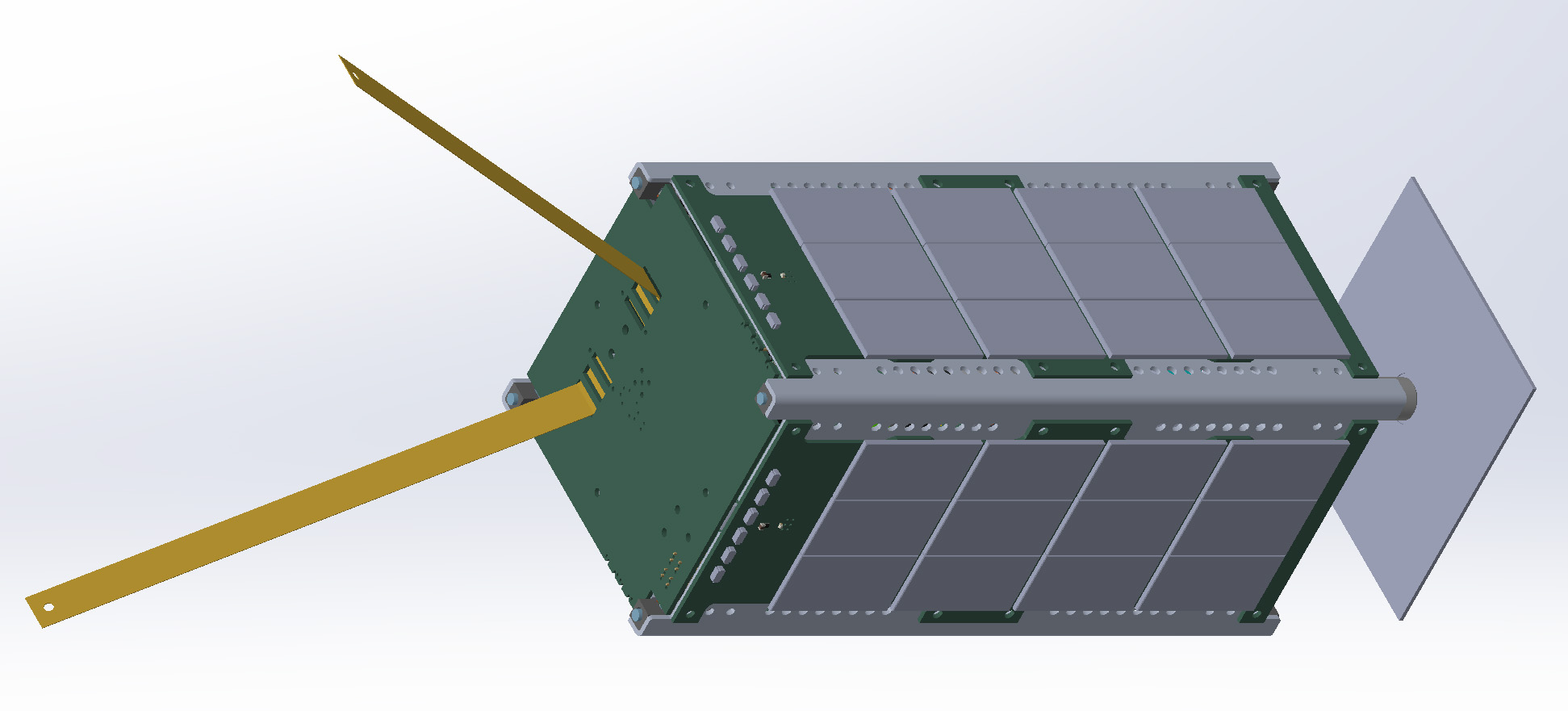
Left: Stowed configuration (as deployed from the ISS). Right: Deployed configuration with antennas and payload platform extended.
The Payload: SMA-Driven Solar Panel Orientation
The payload is a deployable solar panel platform mounted on the spacecraft’s −Z face. After deployment:
- A torsion-spring linkage mechanism lifts the platform away from the body.
- Four Nitinol coils (one per edge) can be selectively heated to generate asymmetric contraction.
- That contraction induces a controlled rotation of the platform to better face the Sun.
The payload is deliberately designed to be:
- Low power — heating only when actuation is needed
- Low part count — no motors or gearboxes
- Software-addressable — selective heating with sensor feedback
- Sensor verifiable — onboard light sensors confirm orientation changes
Subsystems Overview
Structure
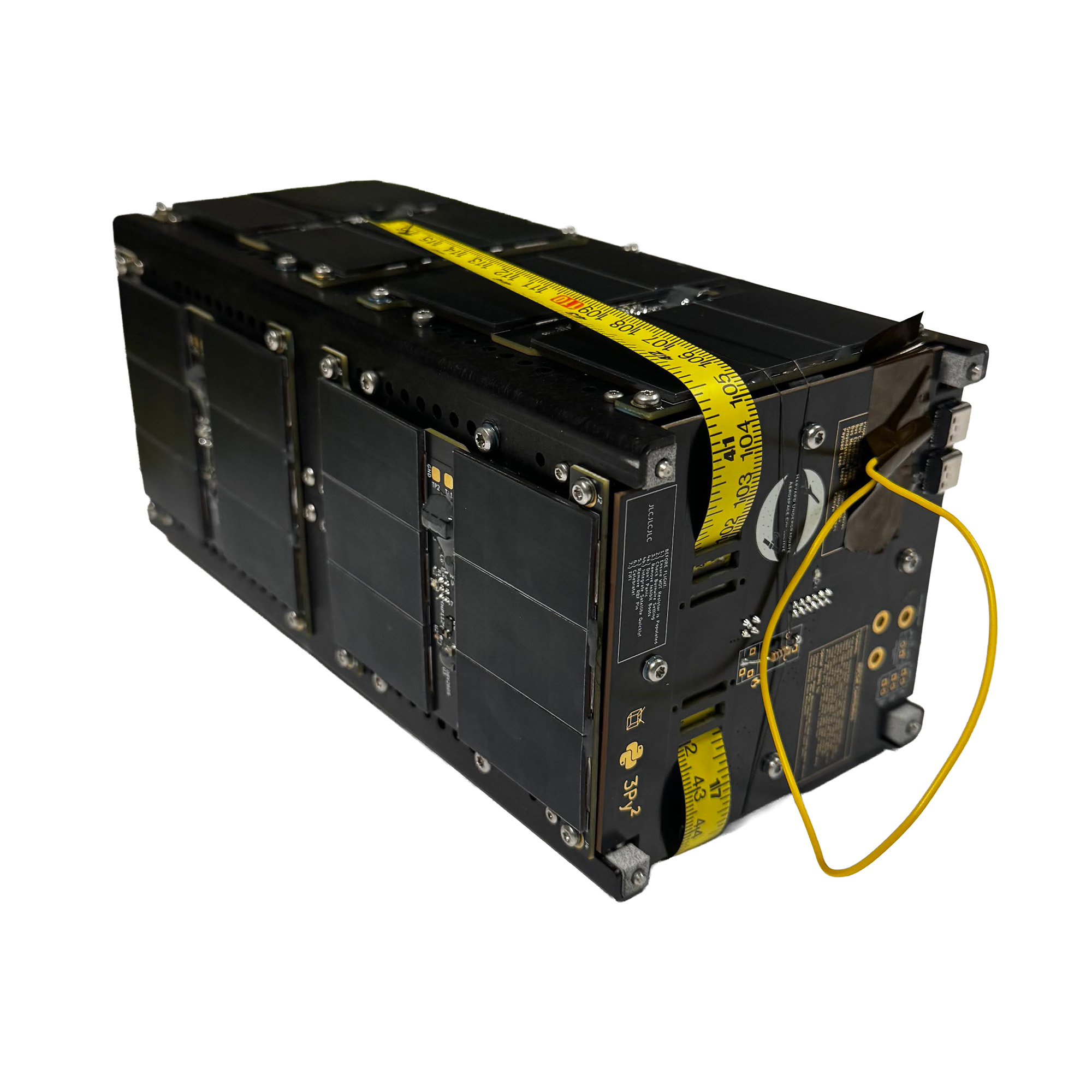
HUCSat uses a custom 2U aluminum structure designed around clean board stacking and harness routing, simple manufacturing, and predictable thermal and mechanical behavior during vibration testing and handling.
Electrical Power System (EPS)
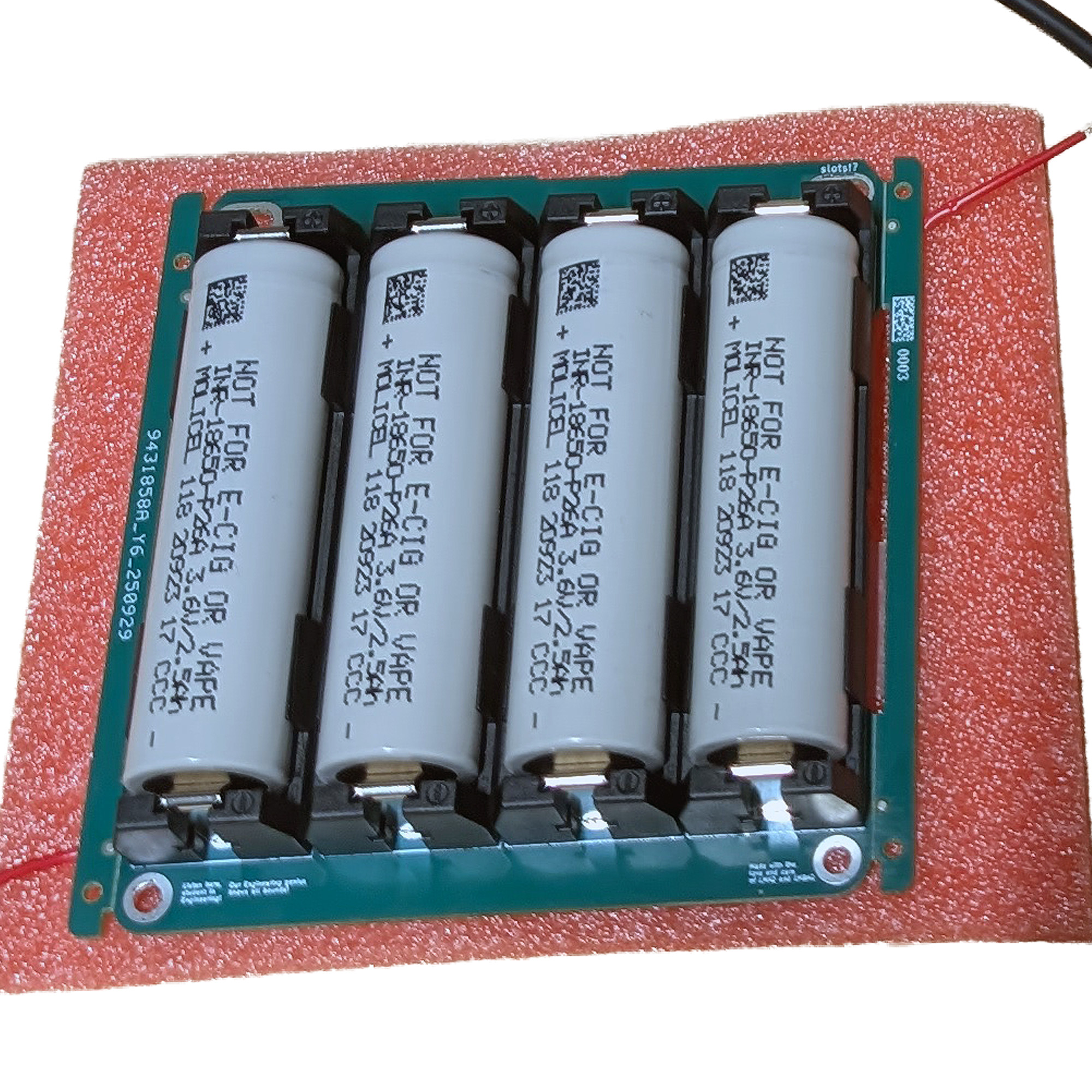
The EPS supports the ISS deployment mission profile with robust protection:
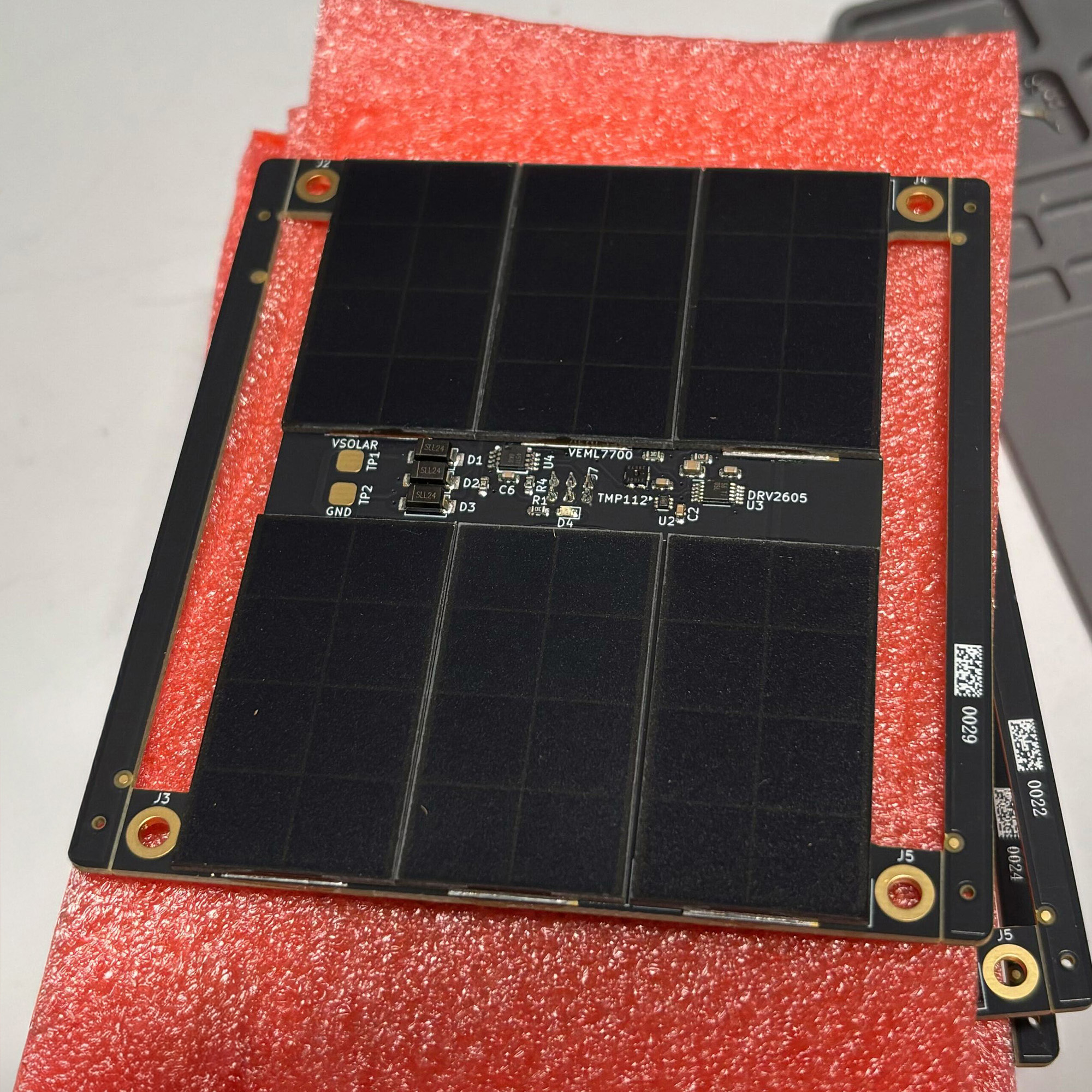
- Body-mounted solar panels on all XY faces to reduce attitude dependence
- Li-ion energy storage with protection circuitry validated through acceptance testing
- Battery architecture supports safe operations through launch, deploy, and on-orbit cycling
Command & Data Handling (CDH)
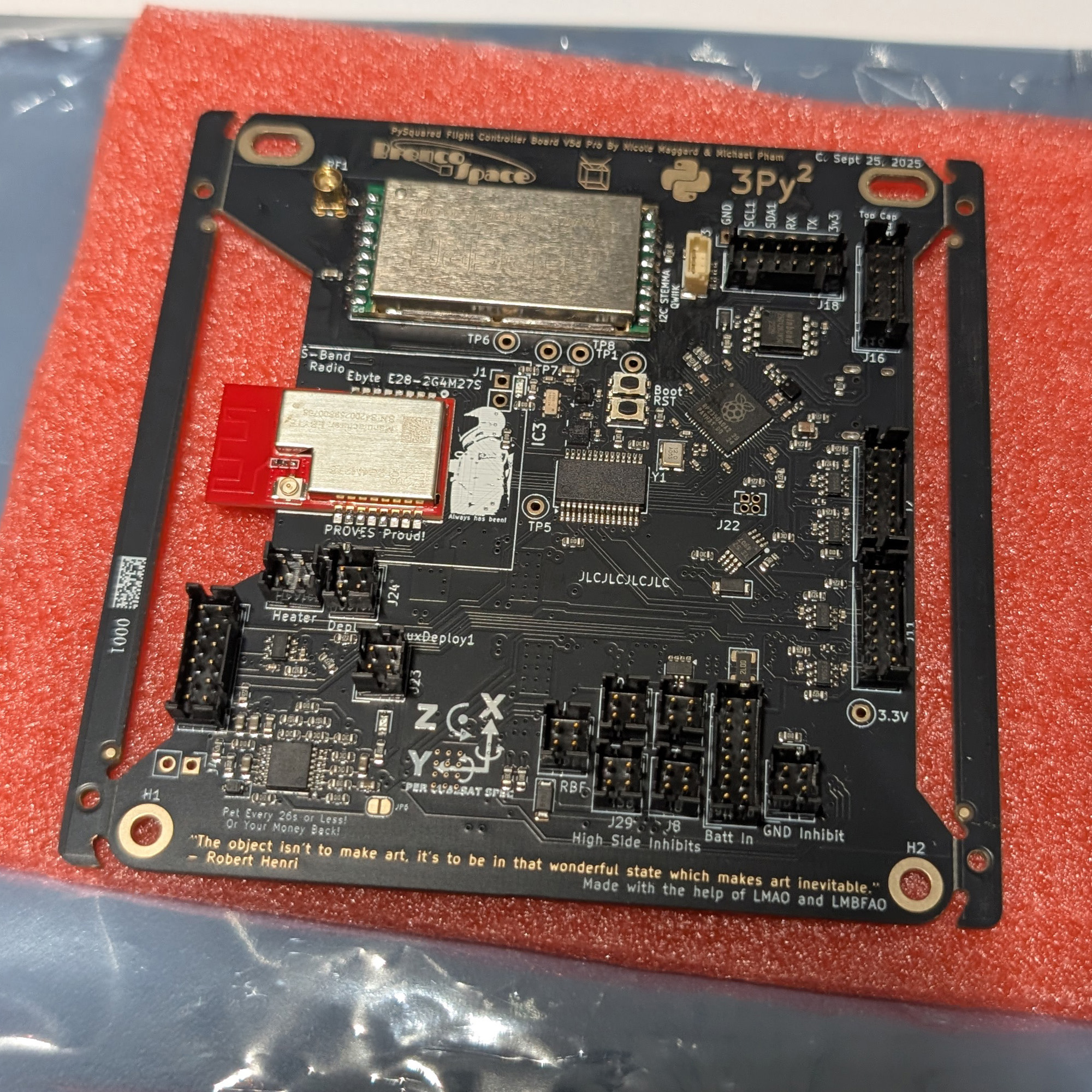
The flight computer coordinates boot and deployment timing logic, radio command/telemetry handling, payload scheduling and logging, and fault handling with watchdog-driven recovery.
Attitude Determination & Control (ADCS)
For a 2U satellite, ADCS focuses on reliably reaching a “good enough” attitude:
- 6-axis IMU and sun/light sensors for attitude estimation
- Embedded PCB magnetorquers for detumbling and coarse pointing
Communications & Ground Segment
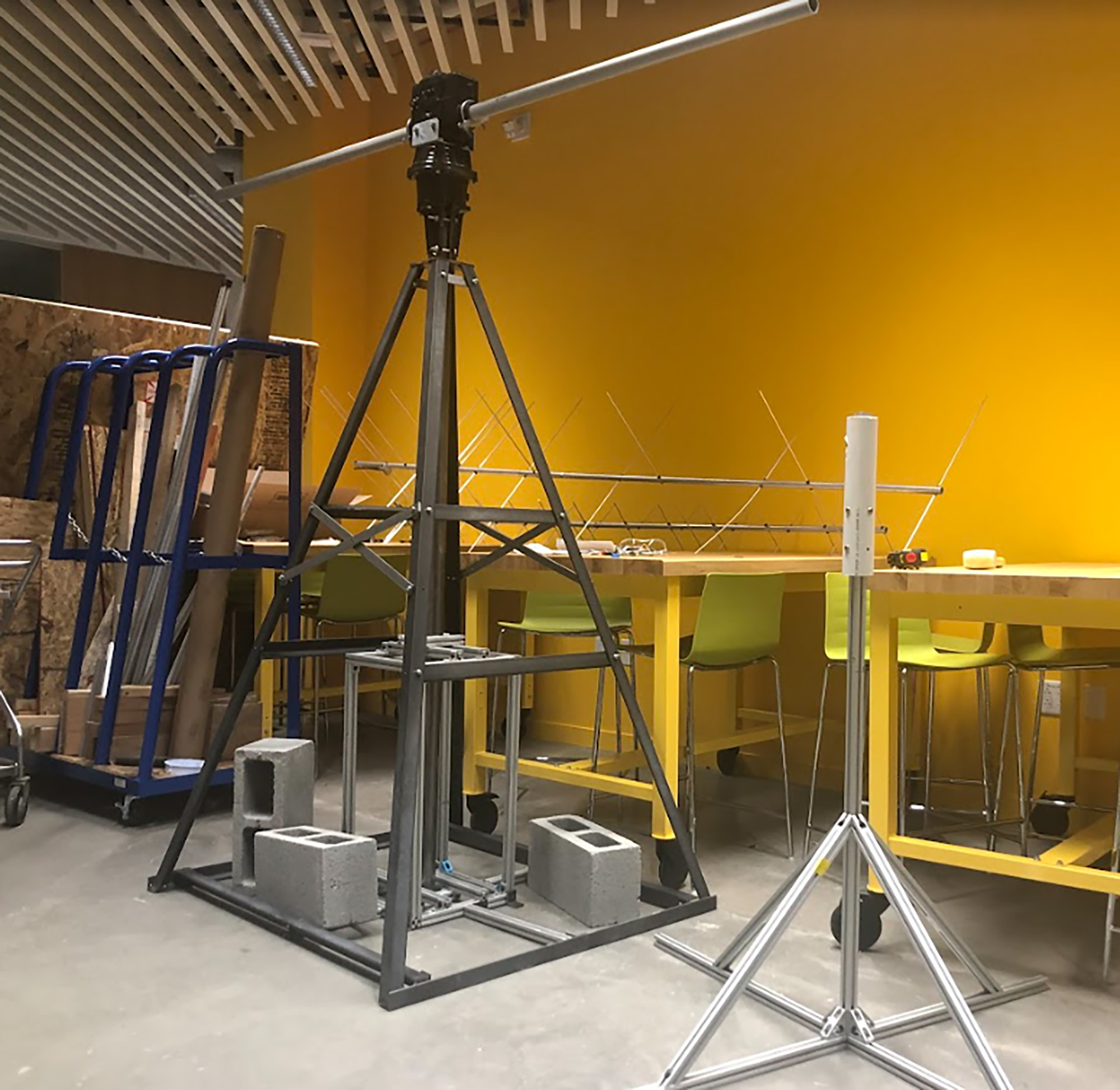
HUCSat’s ground segment allows Harvard students and the distributed amateur-satellite community to receive telemetry:
- UHF link for command uplink and telemetry downlink
- S-band downlink for increased payload data throughput
- Telemetry receivable by distributed amateur ground stations (via the TinyGS network)
- All transmissions are command-terminable for positive control
Verification & Testing
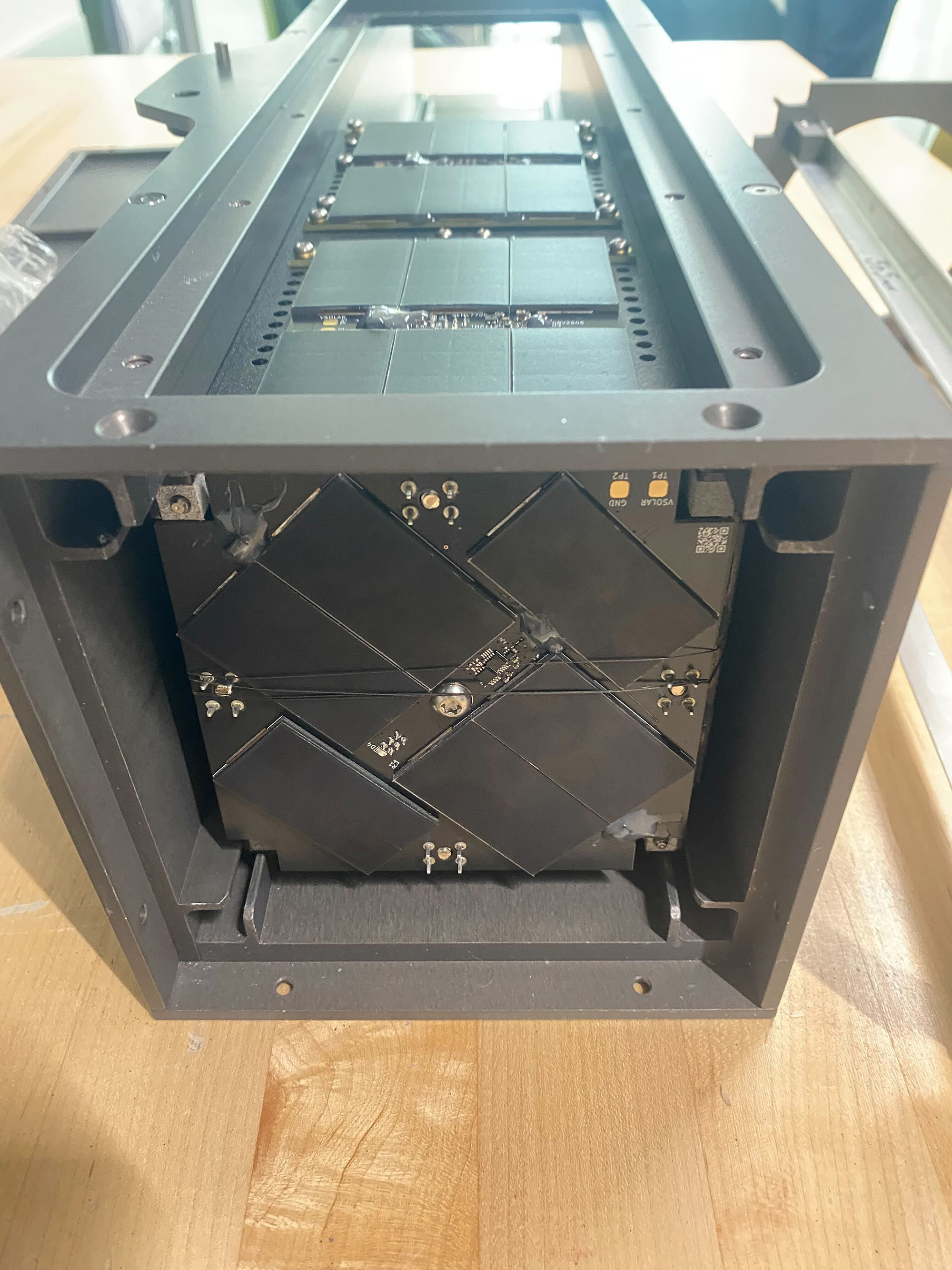
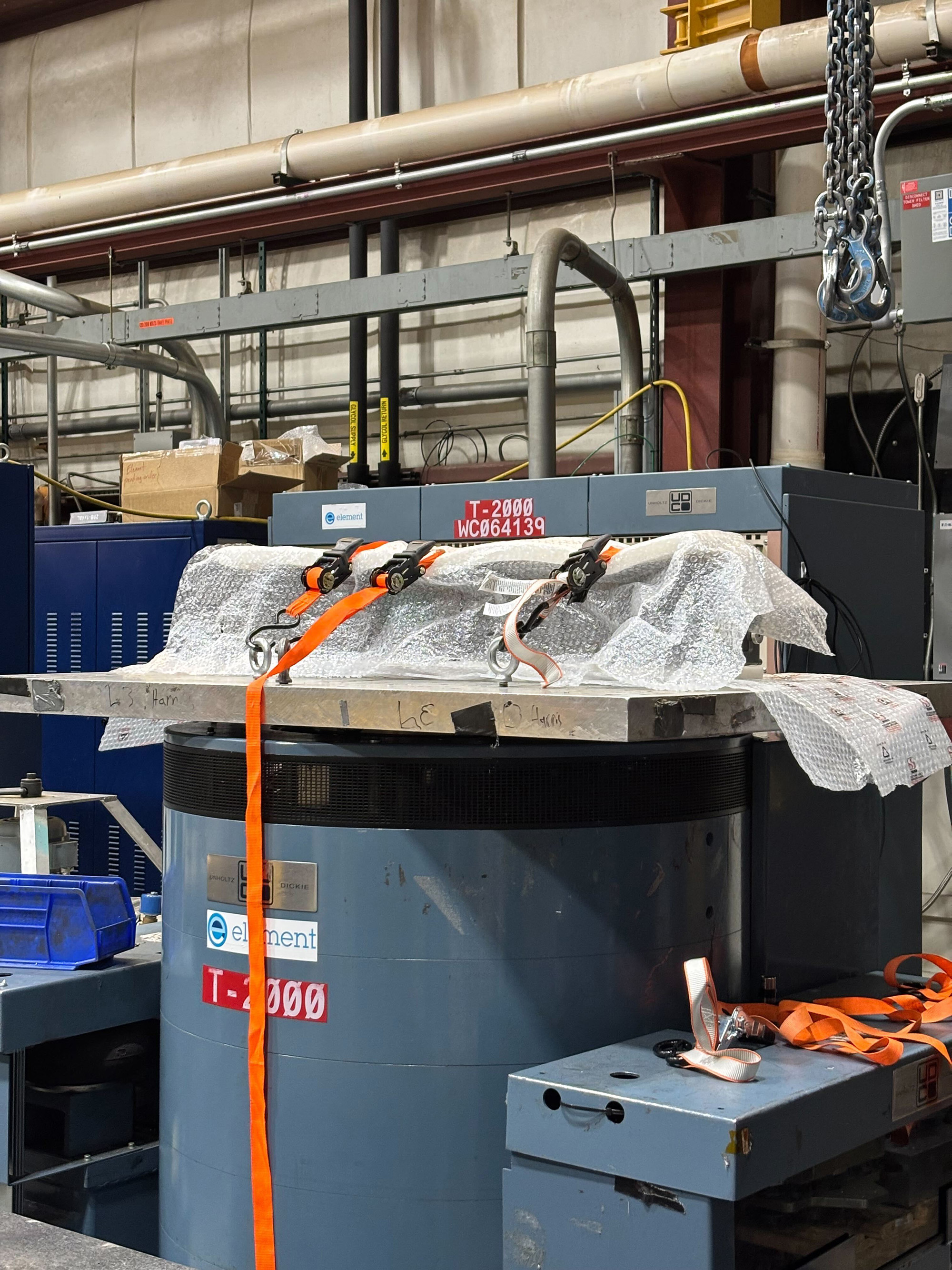
HUCSat was developed under a flight schedule, so verification was structured and evidence-driven. The test program included component- and subsystem-level verification leading up to acceptance-level environmental testing.
Key verification activities included:
- Battery acceptance testing — over-discharge protection, external short protection, vacuum exposure, and vibration
- Deployment mechanism testing — repeated actuation cycles under thermal vacuum conditions
- End-to-end communications testing — RF link verification with ground station hardware
Licensing & Compliance
A flight mission requires disciplined regulatory and safety work:
- Frequency coordination through IARU for amateur satellite bands
- FCC experimental license application for university spacecraft operations
- Orbital debris assessment documenting passive disposal, collision risk, and reentry safety
- Mission designed for rapid natural decay from ISS orbit with no intentional debris release
My Role
Chief Engineer & Technical Lead
As Chief Engineer, I was responsible for the overall technical direction and delivery of the HUCSat mission, including:
- Systems-level integration planning and interface ownership
- Schedule and milestone tracking with external partners
- Ensuring design choices are testable and verifiable
- Leading design reviews and technical decision-making
Hardware Design (CAD & PCBs)
I led key flight-hardware design work, including:
- Spacecraft CAD model and packaging layout in SolidWorks
- Custom PCB assemblies for the payload’s SMA actuation electronics
- Design-for-assembly practices suitable for student manufacturing pipelines
Team Technical Leadership
I invested in scaling technical capability across the team:
- Ran KiCad PCB design workshops so more students could contribute flight-quality hardware
- Ran SolidWorks design-for-production workshops to standardize mechanical practices
- Supported thermal and orbital analysis workflows to strengthen design closure
Licensing & Documentation
I managed major parts of the small-satellite licensing flow and associated technical documentation, coordinating with licensing consultants and university stakeholders to complete the application package.
Current Status
HUCSat was delivered to the launch integration flow in January 2026, launched to the ISS aboard NG-24 on April 11, and deployed into low-Earth orbit on July 2. The spacecraft is operational, and the team is actively downlinking telemetry and mission data through its Harvard ground station and the amateur-satellite network. Current orbital and radio information is available through TinyGS, and the HUAC Satellite Team publishes the mission overview.
Acknowledgements
HUCSat is the product of sustained work by a large student team over multiple years. I’m grateful to the Harvard Satellite Team for deep technical effort across disciplines, faculty mentorship and support, our launch integration partners, and the amateur satellite community that supports educational missions through shared infrastructure and ground station networks.